New paper of the group

Magnetoelectric Polymer-Based Nanocomposites with Magnetically Controlled Antimicrobial Activity

Margarida M. Fernandes, Pedro Martins, Daniela M. Correia, Estela O. Carvalho, Francisco M. Gama, Manuel Vazquez, Cristina Bran and Senentxu Lanceros-Mendez

ACS Appl. Bio Mater. 2021, 4, 1, 559–570

DOI: doi.org10.1021acsbm.0c01125

The emergence of antimicrobial resistance is considered a public health problem due to the overuse and misuse of antibiotics which are losing efficacy toward an increasing number of microorganisms. Advanced antimicrobial strategies via development of alternative drugs and materials able to control microbial infections, especially in clinical settings, are urgently needed. In this work, nanocomposite films were developed from piezoelectric PVDF polymer filled with nickel nanowires to control and enhance the antimicrobial activity via the application of a magnetic stimulus. The material was achieved through crystallization of PVDF upon incorporation of anisotropic and negatively charged Ni nanowires in the polymeric matrix. The nanocomposites have shown to possess antimicrobial properties which was considerably boosted through the application of a magnetic field. More than 55% of bacterial growth inhibition was obtained by employing controlled dynamic magnetic conditions compared to only 25% inhibition obtained under static conditions. This work demonstrates a proof-of-concept for materials able to boost on demand their antimicrobial activity and opens the room for applications in novel medical devices with improved control of healthcare-associated infections.

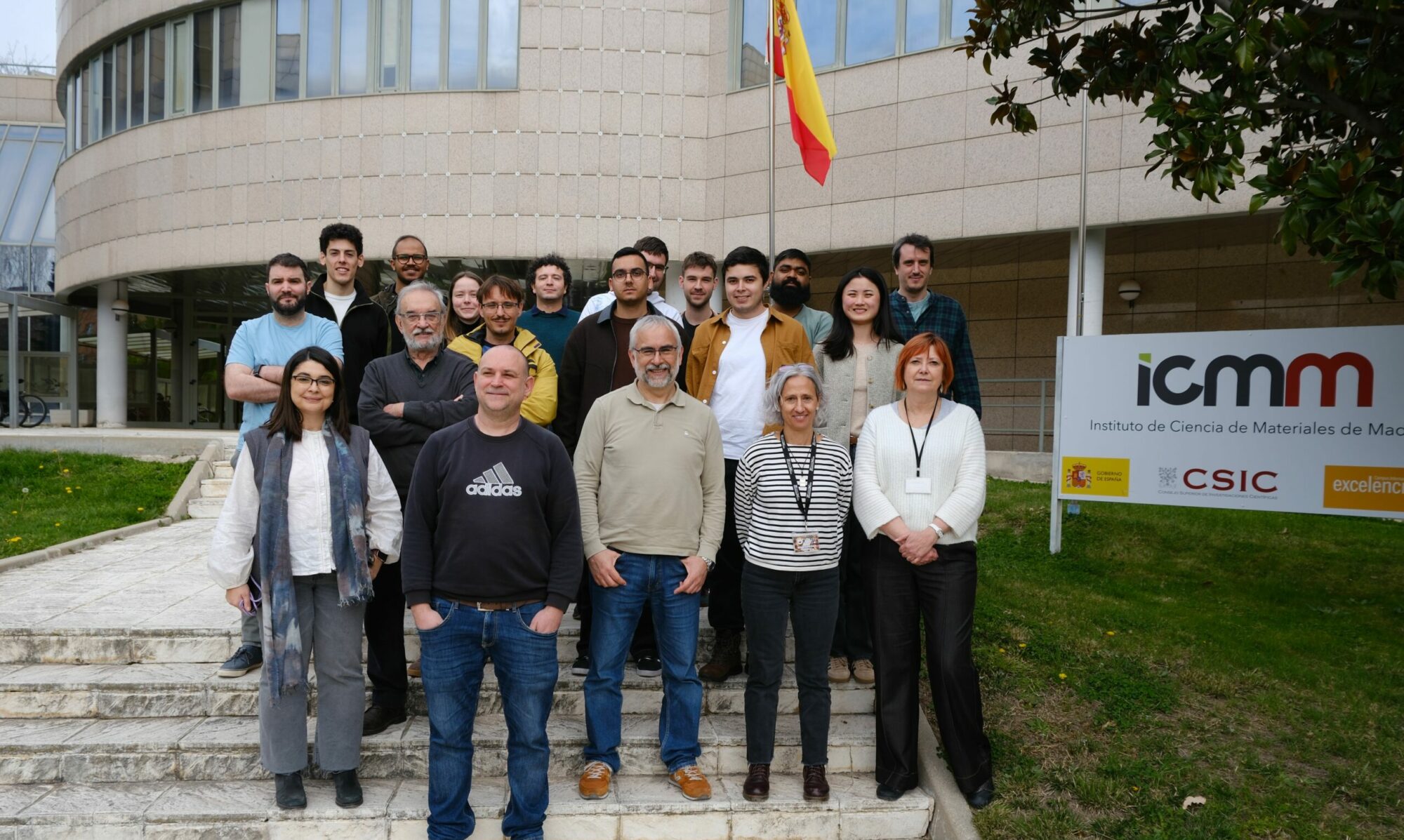
This work has been performed in collaboration between the GNMP group at ICMM/CSIC and the University of Braga in Portugal profiting of their respective expertise in magnetic nanowires and polymers for biomedical applications.

New article of the group

Cylindrical Magnetic Nanowires Applications

Julián A. Moreno, Cristina Bran, Manuel Vazquez and Jürgen Kosel

IEEE Transactions on Magnetics

DOI: 10.1109/TMAG.2021.3055338

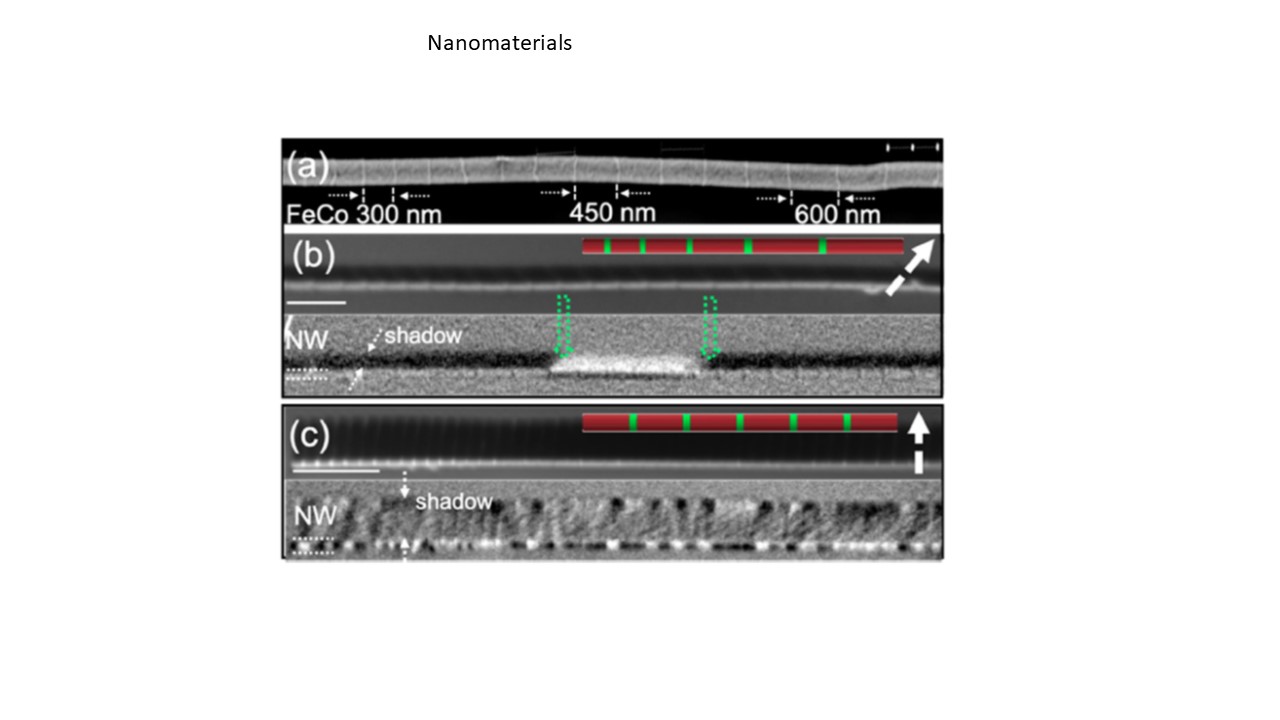
Cylindrical magnetic nanowires feature unique properties, which make them attractive particularly for novel applications. These one-dimensional structures introduce a pronounced shape anisotropy that together with material selection can strongly affect the magnetic properties and can be tuned by incorporating segments of different materials or diameters along the length. They attract a large interest in the scientific community, ranging from physicists to material scientists to bioengineers. These nanowires are developed for and employed in very diverse applications in medicine, biology, data and energy storage, catalysis or microwave electronics, among others. In this review, most active emerging applications of cylindrical nanowires are overviewed. Advantages include several key features as low-cost and high level of control over the design. A fundamental property that distinguishes those applications is the operating frequency that can be chosen to apply as an underlying structure in this review. We attempt to provide a wide and organized view of applications based on cylindrical magnetic nanowires with a focus on tailored physical and chemical properties.

This Review Article is a collaboration between the groups at KAUST, Thuwal, Saudi Arabia and GNMP at ICMM/CSIC. It was supported by the Spanish Ministry MINECO, under project MAT2016-76824-C3-1-R, the Regional Government of Madrid under project S2018/NMT-4321 NANOMAGCOST-CM, and CSIC under project iLinkA20052.

New paper of the group

On the path to novel magnetic cores: Electromagnetic simulations of amorphous magnetic microwires for inductive applications

C. Johnson, X. Zhang, D. Li, R. P. del Real, S. Pakdelian, M. Vázquez, L. H. Lewis and B. Lehman

AIP Advances 11 (2021) 015211

DOI: doi.org/10.1063/9.0000205

The potential of water-quenched amorphous magnetic microwires in magnetic core applications is assessed by electromagnetic simulation performed on microwires incorporated into two configurations: (1) a regular rod inductor and (2) an air-gapped toroidal inductor. Each model utilizes a cylindrical magnetic element of 100 microns in diameter, surrounded by a copper winding element that carries an alternating current at frequency f=100 kHz. These models consider amorphous Fe(Co)SiB microwires specified by their experimentally determined B-H response as well as two benchmark core materials – soft ferrite (MnZn-oxide type) and Metglas(2605SA1). Simulation results indicate that the microwire material exhibits a higher degree of magnetization alignment along its length under the electromagnetic field created by the loop current, relative to the other two cores. The microwire configuration also exhibits improved core inductance by as much as 30% compared to those of the other two materials. These results demonstrate that amorphous magnetic microwires have intriguing potential in inductive applications.

This work is the result of the international collaboration between the group GNMP, ICMM/CSIC and the Northeastern University of Boston, USA. It has been developed within the i-LinkA-20074 project funded by CSIC

New paper of the group

Novel Aurivillius Bi4Ti32xNbxFexO12 phases with increasing magnetic-cation fraction until percolation: a novel approach for room temperature multiferroism

Miguel Alguero,  Miguel Perez-Cerdan, Rafael P. del Real, Jesus Ricote and Alicia Castro

J. Mater. Chem. C, 2020, 8, 12457

DOI: 10.1039/d0tc03210grsc.li/materials-c


Aurivillius oxides with general formula (Bi2O2 (Am1BmO3m+1) are being extensively investigated for room-temperature multiferroism and magnetoelectric coupling. The chemical design strategy behind current investigations is the incorporation of magnetically active BiMO3 units (M: Fe3+, Mn3+, Co3+. . .) to the pseudoperovskite layer of known ferroelectrics like Bi4Ti3O12, increasing m. The percolation of magnetic cations at the B-site sublattice is required for magnetic ordering and thus, phases with m Z 5 are searched. Alternatively, one can try to directly substitute magnetic species for Ti4+ in the perovskite slab, without introducing additional oxygen octahedra. We report here the mechanosynthesis of Aurivillius Bi4Ti32xNbxFexO12 phases with increasing x values up to 1. A maximum magnetic fraction of 1/3, surpassing the threshold for percolation, was reached. Preliminary structural analysis indicated a continuous solid solution, though hints of structural changes between x = 0.25 and 0.5 were found.
Ceramic processing was accomplished by spark plasma sintering of the mechanosynthesized phases, including those with high-x ones with reduced thermal stability. This has enabled us to carry out full electrical characterization and to demonstrate ferroelectricity for all phases up to x = 1. Magnetic measurements were also carried out, and weak ferromagnetism was found for x = 1. Therefore, Bi4TiNbFeO12 is proposed to be a novel room-temperature multiferroic.