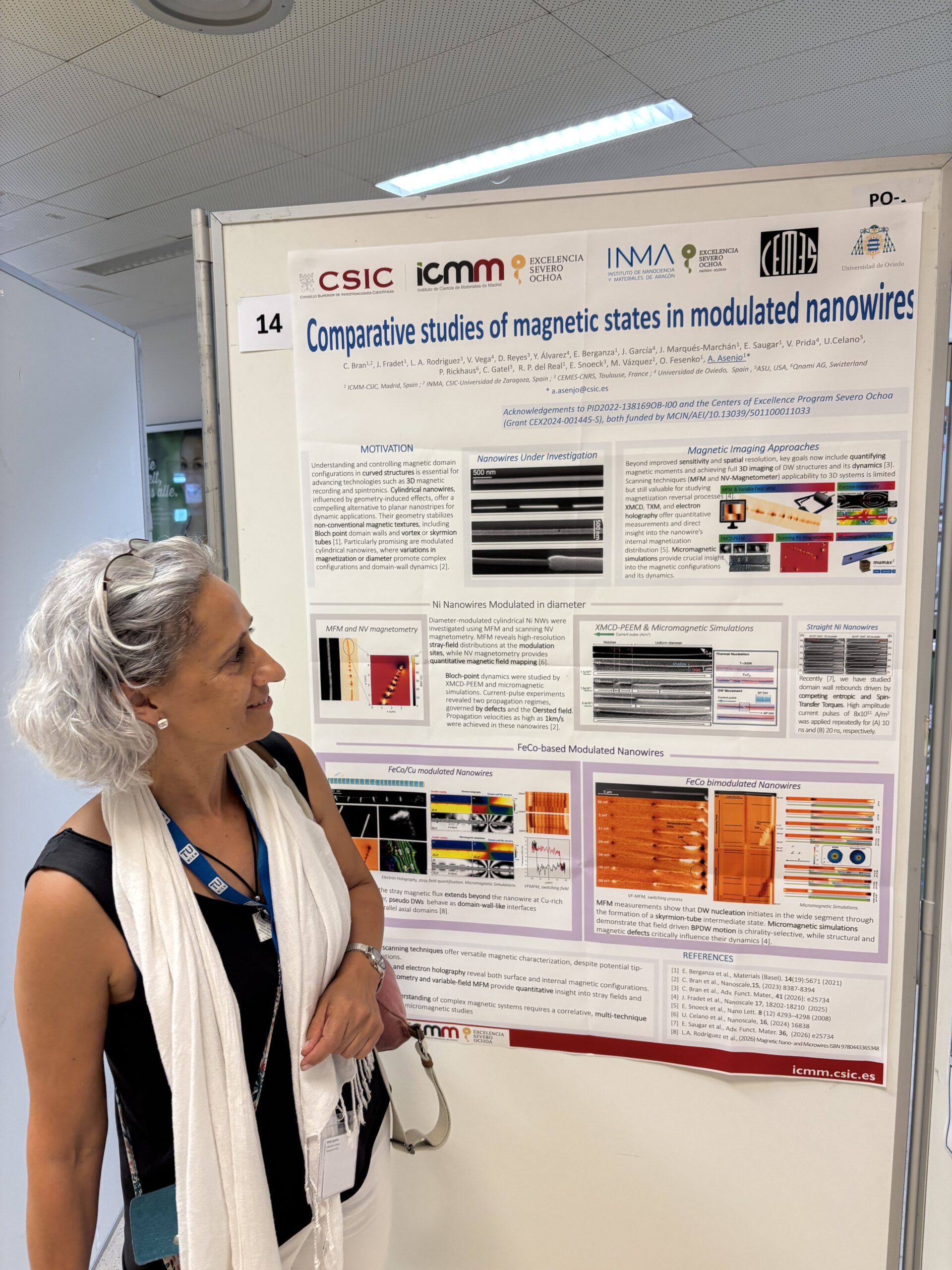
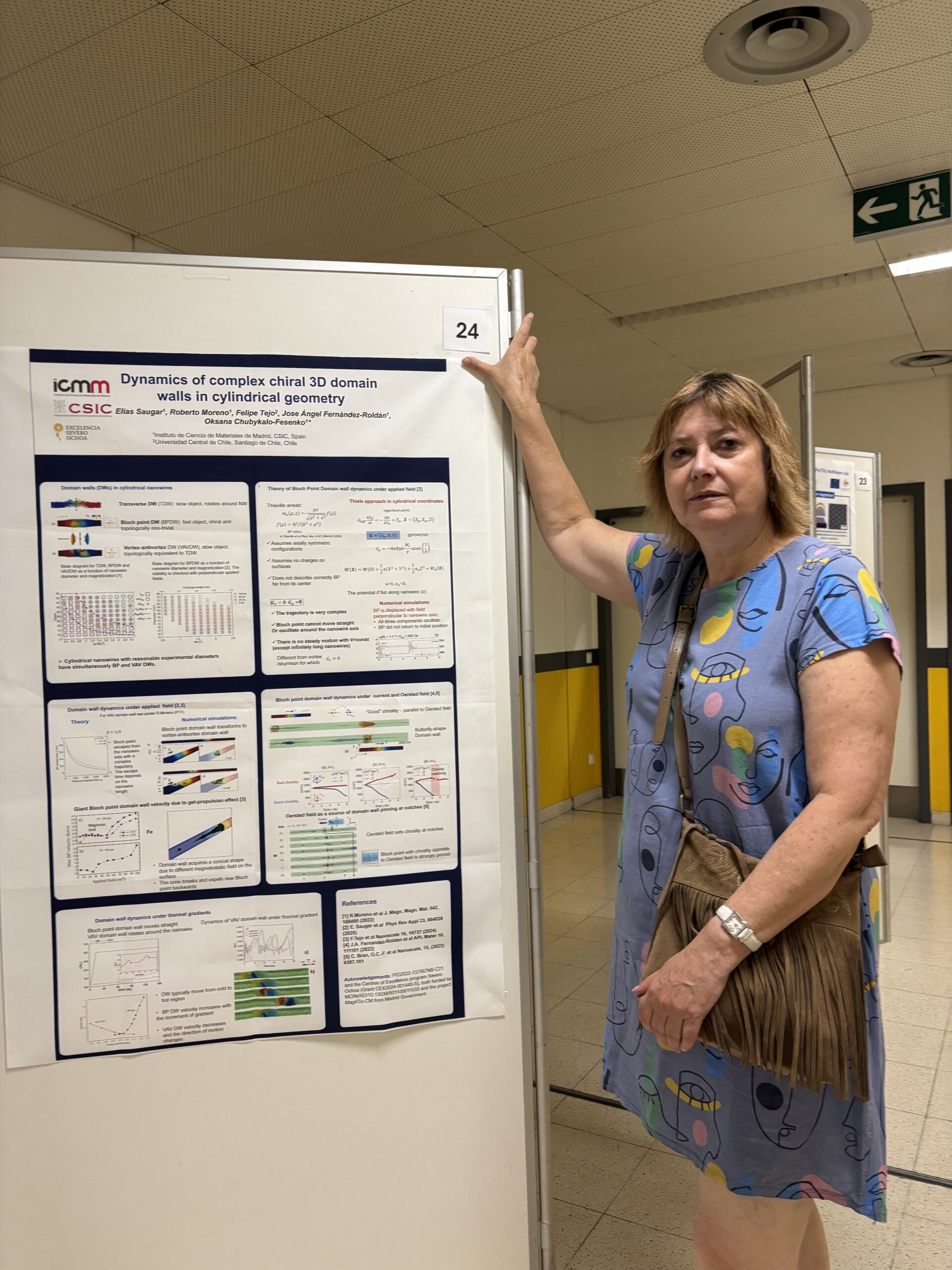
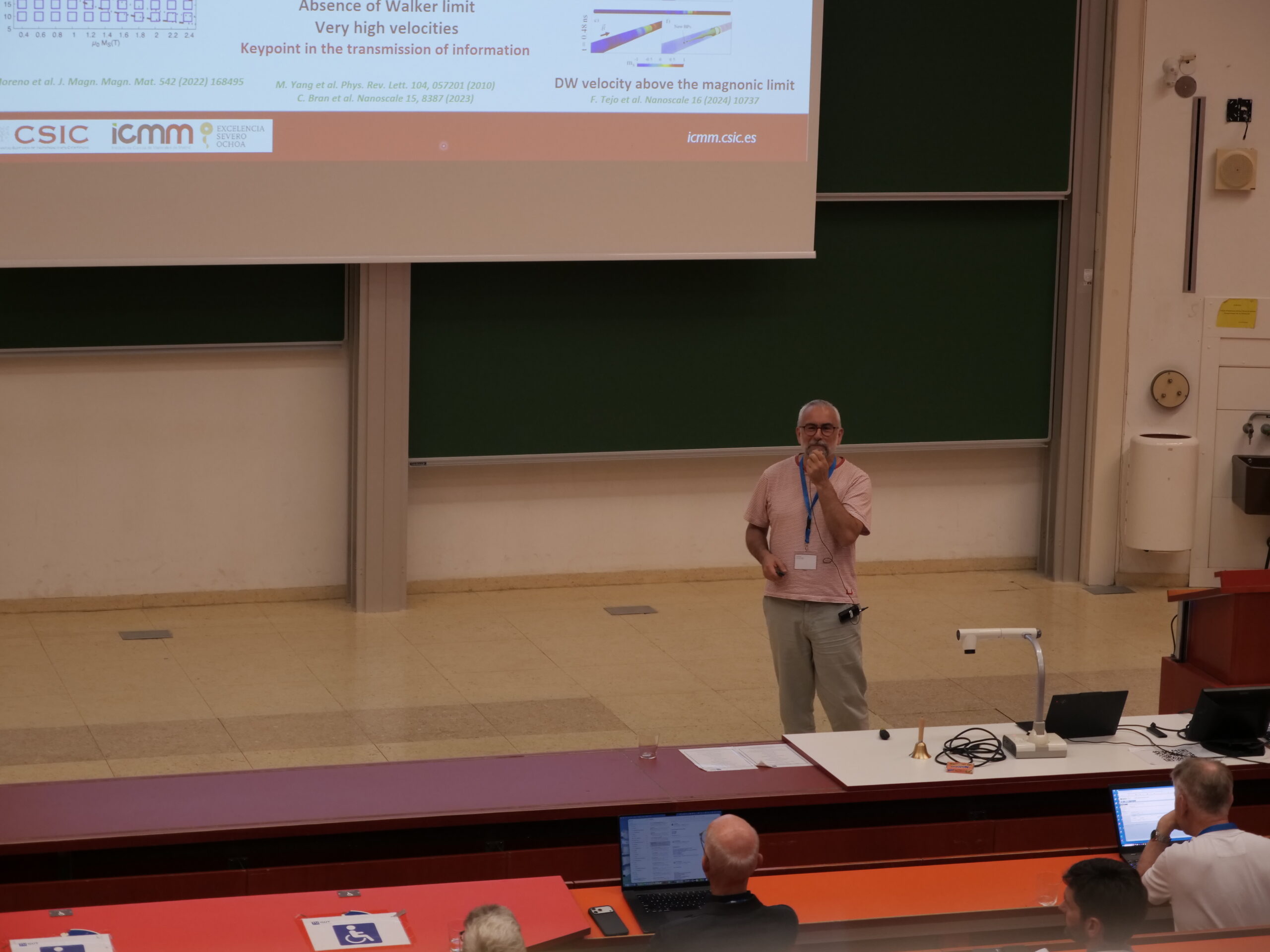
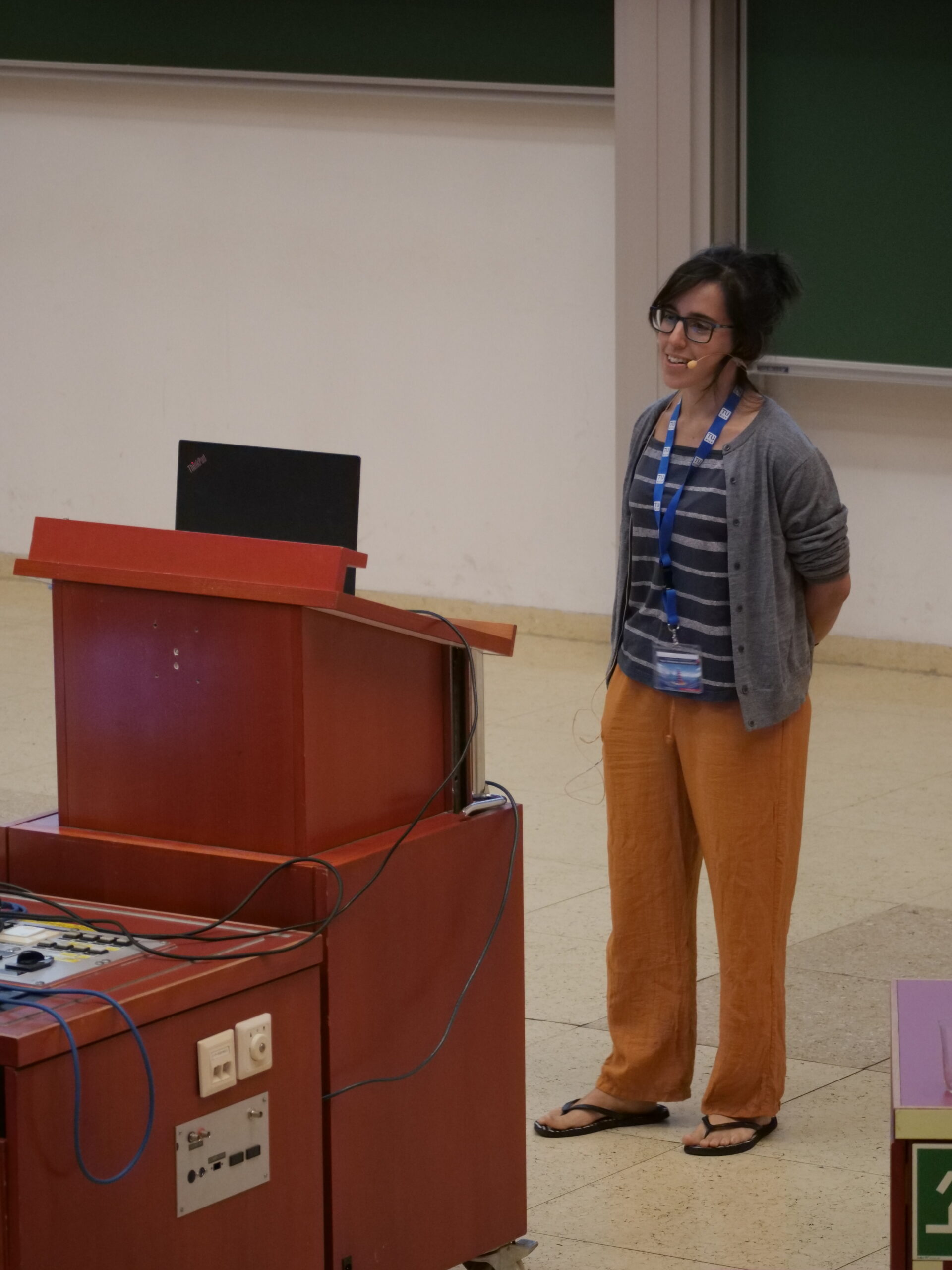
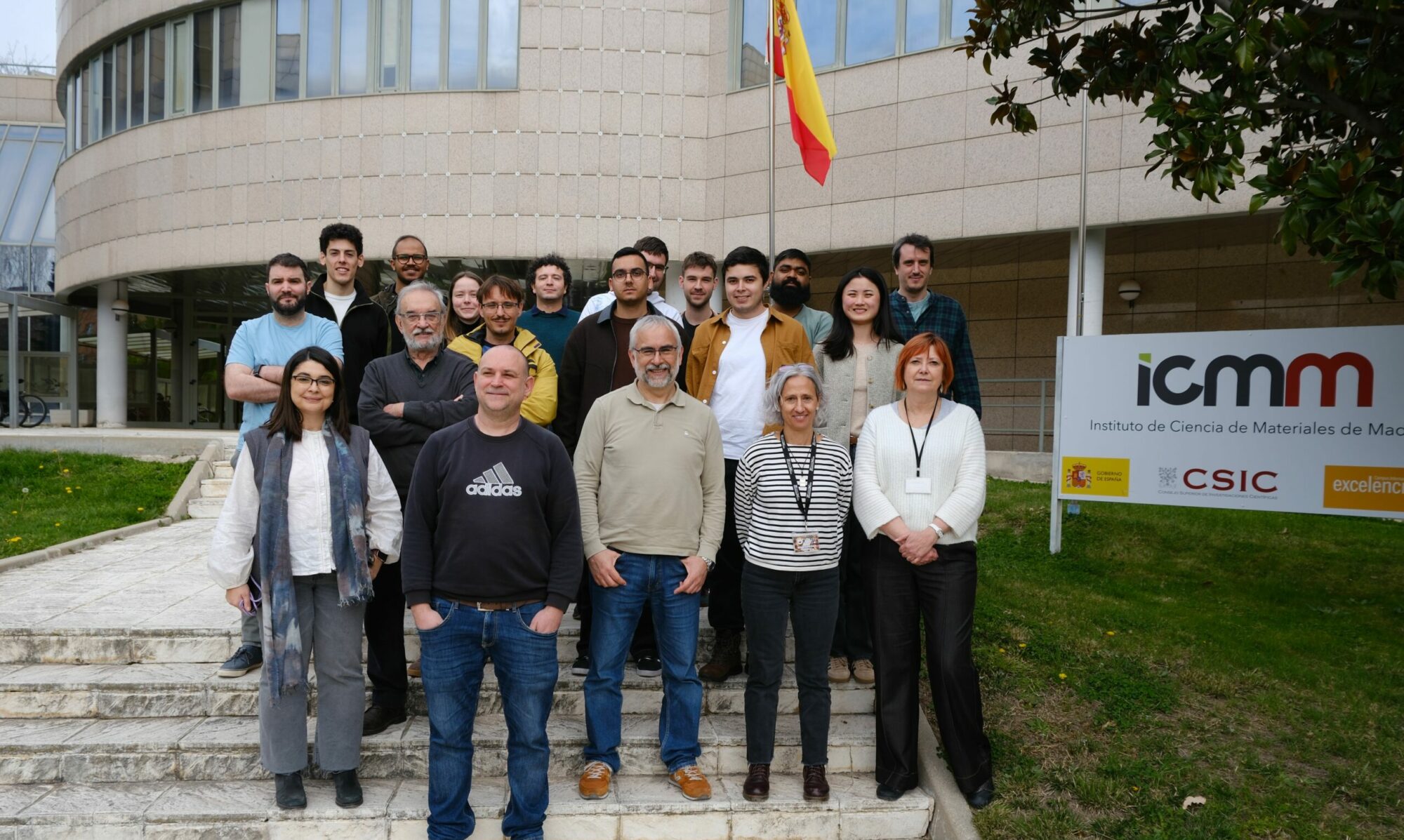
The 1st International Symposium on Three-Dimensional Nanomagnetism (3DMAG 2026) was held in Viena from July 13 to 17th, with Agustina Asenjo, Oksana Fesenko, David Navas, Edier Berganza and Rafael Pérez participating.
Instituto de Ciencia de Materiales de Madrid, CSIC
The 1st International Symposium on Three-Dimensional Nanomagnetism (3DMAG 2026) was held in Viena from July 13 to 17th, with Agustina Asenjo, Oksana Fesenko, David Navas, Edier Berganza and Rafael Pérez participating.
Tailoring the Anomalous Nernst Effect of Co/Pt Multilayers Grown on Strained Flexible Substrates
Pablo Martinez Outomuro, David Navas, Cantia Belloso, Guillermo Lopez-Polin, Agustina Asenjo
–Advanced Electronic Materials, 2026, 0:e70423
-DOI: 10.1002/aelm.70423
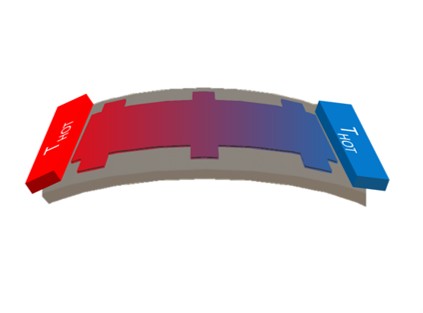
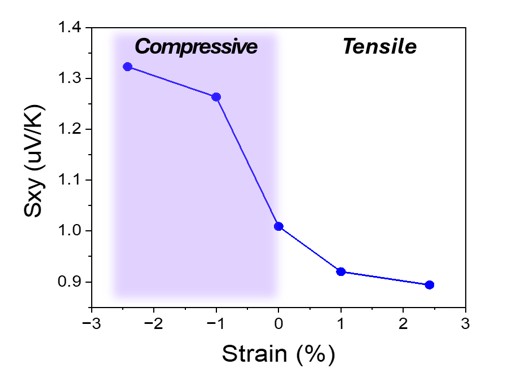
This work investigates the impact of in-plane strain on the Anomalous Nernst Effect (ANE) of Co/Pt multilayers deposited on polyimide. Strain is introduced directly into the growing films by bending the substrates during deposition. ANE measurements exhibit an asymmetric response, increasing by over 30% under compression while decreasing under tension. Hall effect measurements reveal a similar asymmetric trend in transversal resistivity ( ρxy ), whereas longitudinal resistivity ( ρxx ) rises symmetrically (up to ∼ 200%), indicating that anomalous transport is decoupled from general carrier scattering. While the increase in ρxx is dominated by extrinsic scattering, such as defects or grain boundaries formed during substrate relaxation, the ANE response is governed by intrinsic interface modifications. Specifically, compression enhances interfacial scattering efficiency by reducing Co–Pt spacing and strengthening spin–orbit coupling, whereas the tensile tension degrades the ANE response. These findings demonstrate that strain engineering is a powerful tool to tune the thermomagnetic and transport properties of magnetic multilayers, leading to significant efficiency enhancements in spintronic systems.
This work was supported by the Spanish Ministry of Innovation and Science MCIN/AEI/10.13039/501100011033, under projects PID2022- 138169OB-I00, PID2022-138908NB-C32, and CNS2022-135949, and the Regional Government of Madrid under Project CM TEC-2024/TEC- 380 “Mag4TIC”. Acknowledge the Severo Ochoa Centres of Excellence program through Grant CEX2024-001445-S/ funded by MICIU/AEI / 10.13039/501100011033 and “María de Maeztu” Programme for Units of Excellence in R&D (CEX2023-001316-M). GLP acknowledges funding from the Ramón y Cajal Programme under contract RYC2023-044003- I. PMO acknowledges financial support from the Spanish Ministry of Science and Innovation through grant PID2023-00832.
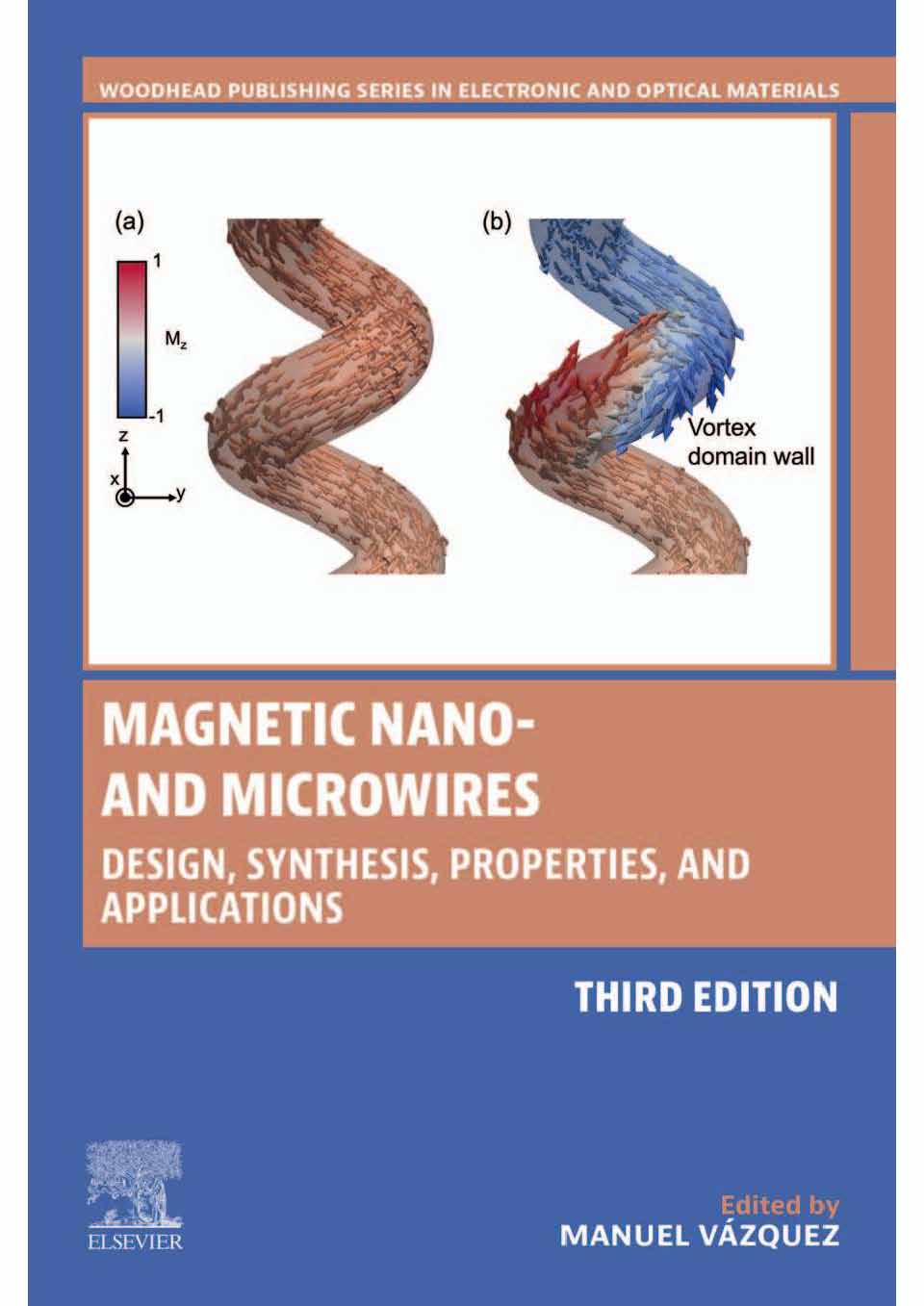
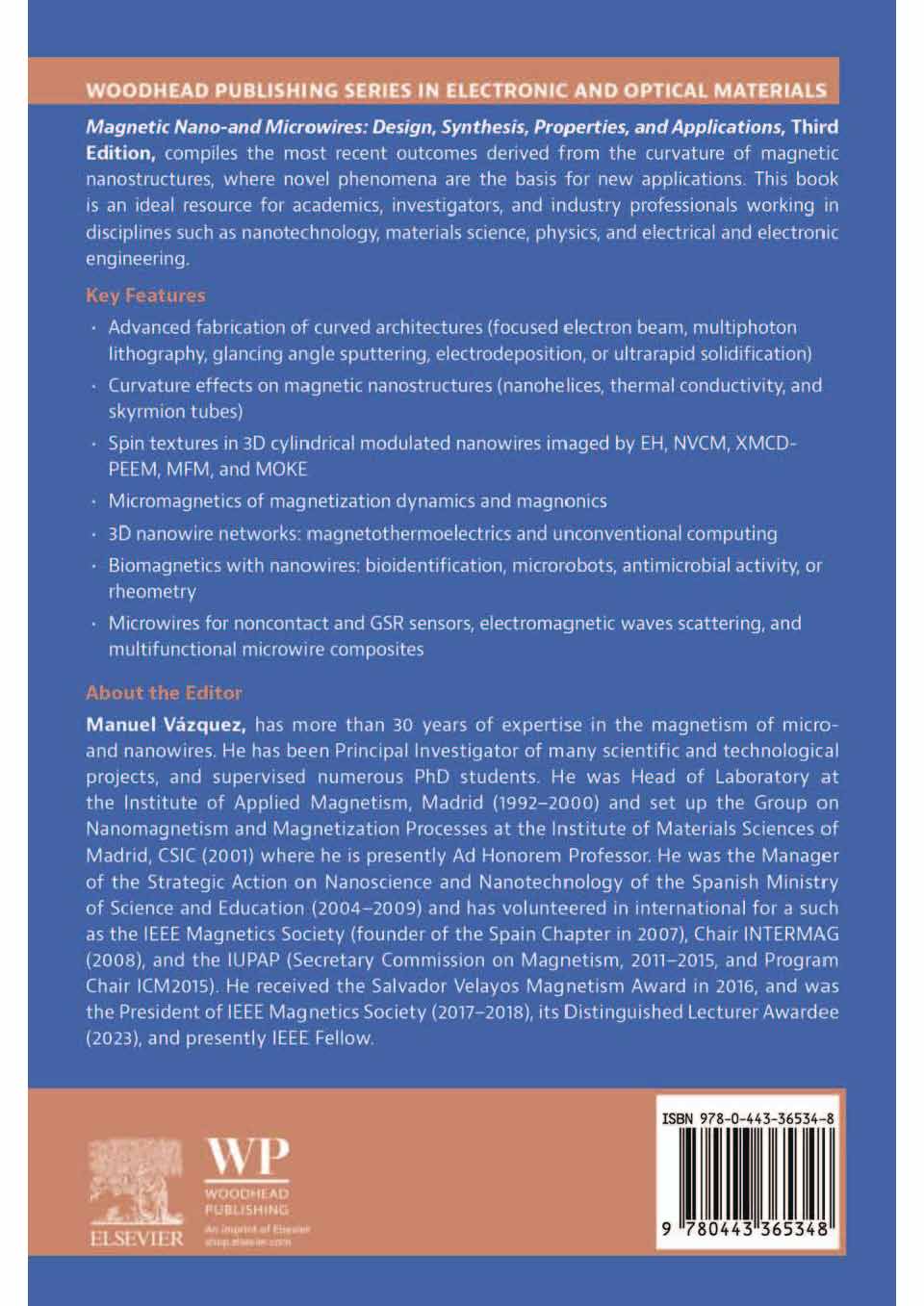
Manuel Vázquez, recognized as “IEEE Fellow” for his contributions to understanding the magnetism of cylindrical nanowires and microwires
Manuel Vázquez, emeritus professor at the Nanomagnetism and Magnetization Processes Group at the Madrid Institute of Materials Sciences (ICMM-CSIC), has been recognized as an IEEE Fellow for his contributions to understanding the magnetism of cylindrical nanowires and microwires. This designation is the highest grade of the Institute of Electrical and Electronics Engineers, IEEE, membership, the world’s largest technical professional organization dedicated to advancing technology for the benefit of humanity, and is recognized as a prestigious honor and an important career achievement.
As Kathleen A. Kramer, 2025 IEEE President and CEO, explains, recognizing the achievements of its members is an important part of the mission of IEEE. Each year, following a rigorous evaluation procedure, the IEEE Fellow Committee recommends a select group of recipients for elevation to IEEE Fellow: «less than 0.1% of voting members are selected annually for this member grade elevation,» says Kramer.
The IEEE is the world’s leading professional organization dedicated to advancing technology for the benefit of humanity. With almost 500,000 members in more than 190 countries, IEEE is a leading authority on a wide variety of areas in electrical and computer sciences, engineering and related disciplines. «From education and professional development to research and humanitarian outreach, IEEE’s work aims to advance technology for the public good,» says its webpage.
The IEEE publishes approximately a third of the world’s technical literature in electrical engineering, computing, and electronics, and has an active portfolio of 1,144 standards. Additionally, the organization also sponsors more than 2,000 conferences each year.