“Research on the electromagnetic sensing adaptability to different clinical parameters”
In collaboration with the company Ortho Baltic, from Lithuania, supervised by M. Vazquez and R.P. del Real
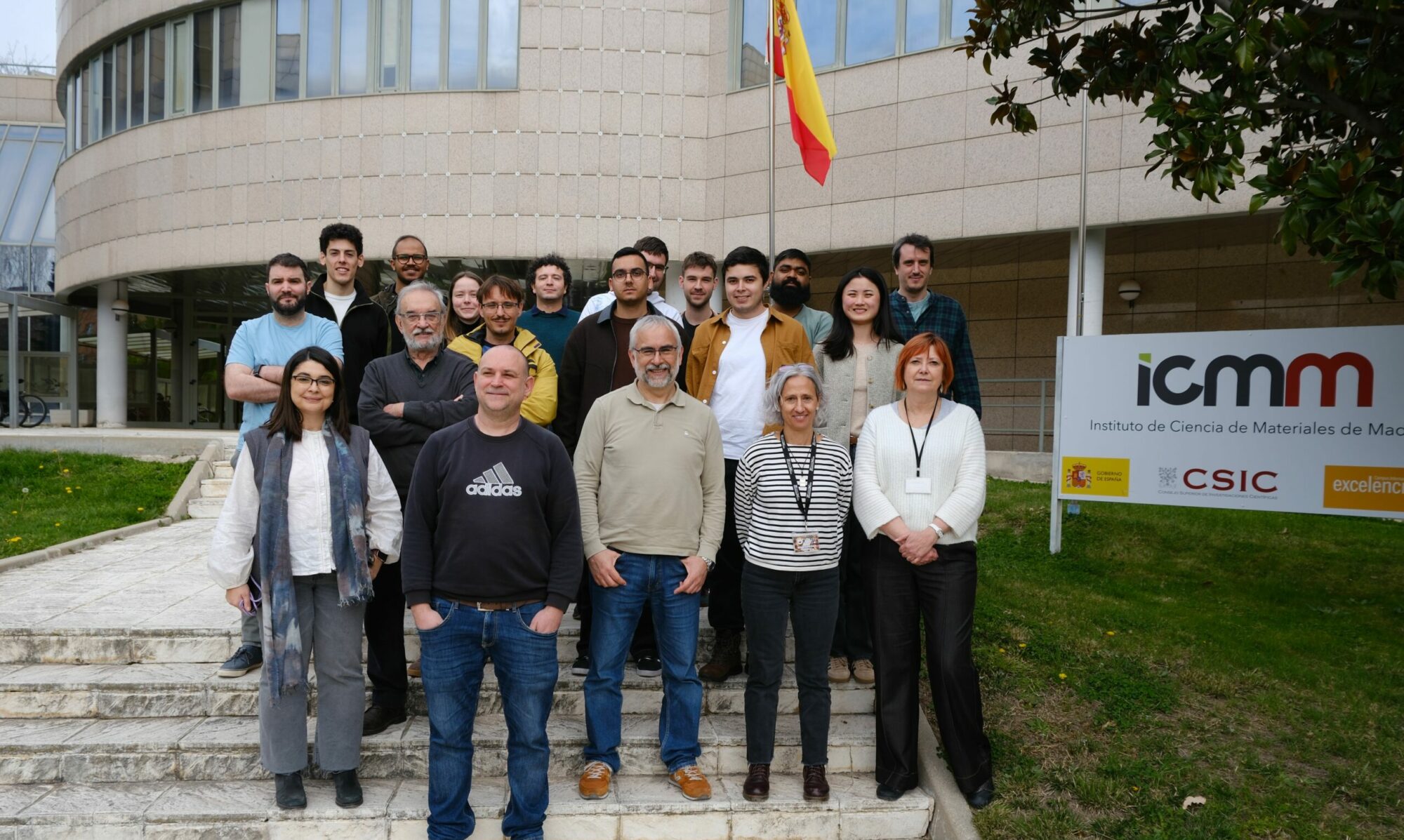
Group of Nanomagnetism and Magnetization Processes
Instituto de Ciencia de Materiales de Madrid, CSIC
“Research on the electromagnetic sensing adaptability to different clinical parameters”
In collaboration with the company Ortho Baltic, from Lithuania, supervised by M. Vazquez and R.P. del Real
“Continuous and nanopatterned TbCo based heterostructures with in-plane and perpendicular anisotropy”
Nikita A. Kulesh, PhD by the Autonomous University of Madrid (Sobresaliente cum laude), supervised by Manuel Vázquez and Vladimir O. Vaskovskii
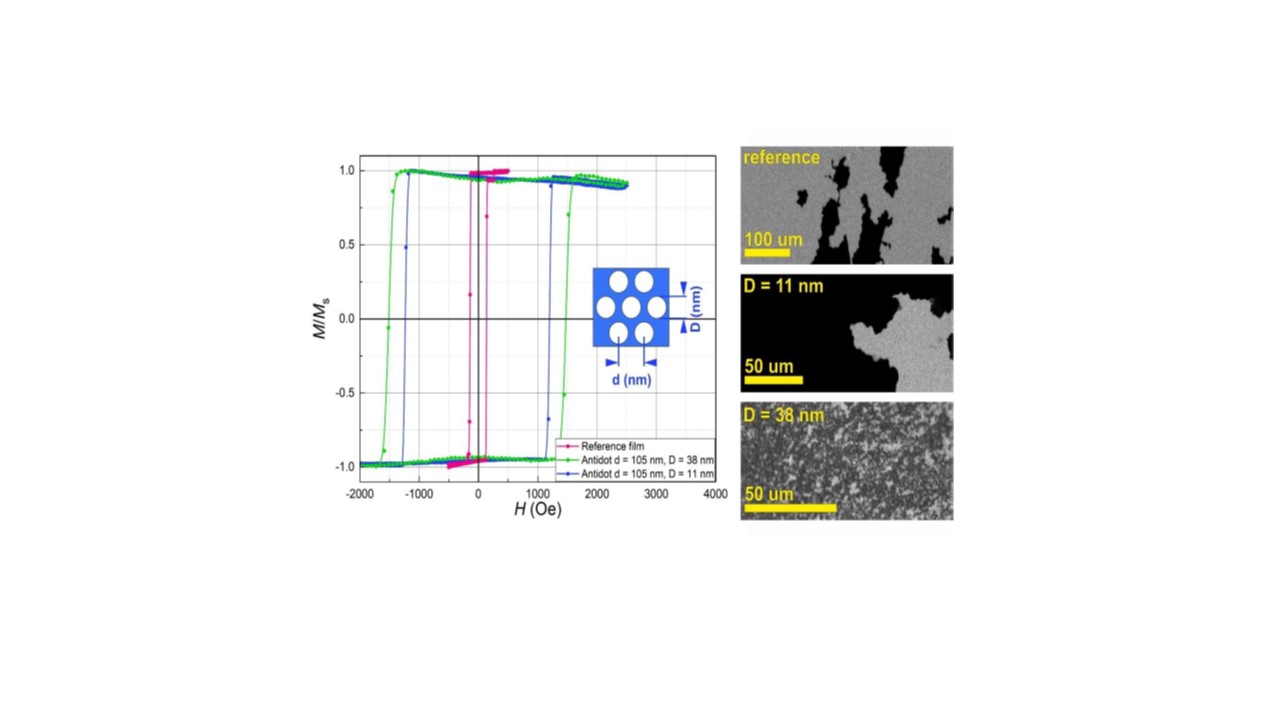
This thesis focuses on investigation of magnetic properties and magnetization reversal processes in continuous and antidot patterned TbCo ferrimagnetic amorphous films with perpendicular magnetic anisotropy (PMA). The search for new ways of tailoring magnetic anisotropy and hysteresis properties of magnetic films with PMA by adjusting their shape at the nanoscale level is the main objective.
In the first part, magnetic properties of amorphous TbCo films are investigated using auxiliary systems with simpler magnetic structures LaCo and GdCo. A possibility to produce TbCo layers having the same composition but different character of magnetic anisotropy is demonstrated. TbCo layers with PMA or in-plane magnetic anisotropy were used to induce unidirectional anisotropy in adjoining FeNi layers.
In the last part, micromagnetic simulation is employed to analyze and reproduce experimental results obtained for TbCo and GdCo antidot patterned films. An approach of step-by-step complication of micromagnetic model is used so separate and analyze sources of experimentally observed variations in magnetization processes.

This PhD research study derives from the collaboration with the Department of Magnetism and Magnetic Nanomaterials, Urals Federal University in Ekaterinburg.
Fernando Meneses, Cristina Bran, Manuel Vázquez and Paula G. Bercoff
Materials Science and Engineering B 261 (2020) 114669
DOI: doi.org/10.1016/j.mseb.2020.114669
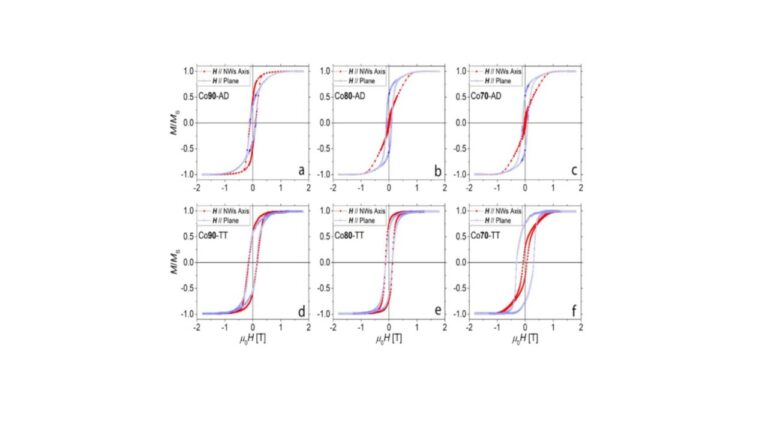
Ordered arrays of CoxPt100-x cylindrical nanowires (NWs) with x = 90, 80, 70 were synthesized by template-assisted electrodeposition using nanoporous alumina membranes of 55 nm pore diameter. The obtained NWs alloys crystallize in hcp and/or fcc structures, depending on the composition and thermal treatment, resulting in different magnetic behaviors. The magnetic anisotropy was studied as a function of composition and crystalline structure in as-deposited and annealed samples. An enhanced coercivity was obtained for the Co70Pt30 NWs array, in which in-plane anisotropy (e.g., perpendicular to the NWs axis) was found. These characteristics have not been reported for NWs of this kind. A simplified model of effective anisotropy including shape, magnetostatic interaction and magnetocrystalline contributions is presented, which appropriately describes the magnetic behavior of the CoxPt100-x NWs arrays before and after annealing.
This work has been performed in collaboration with the National University of Cordoba, Argentina within the framework of the i-COOP B 20037 project supported by CSIC.
“Method for nanostructured materials fabrication combining soft lithographic imprint, aluminum anodization and metal sputtering”
M. Vazquez, D. G. Trabada and D. Navas
EU Patent application PCT/EP2020/066600
The present invention relates to a method for nanostructured materials fabrication combining soft lithographic imprint, aluminum anodization and metal sputtering which permits the preparation of highly ordered nanoporous alumina templates with straight lines, square lattice ordering, and others.
The procedure is based on large-scale nanoimprint using patterned commercial disks as imprint media, followed by single anodization process and metal sputtering.
This technique constitutes a non-expensive method for mould production and pattern generation avoiding standard lithographical techniques useful in technologies such as for nano-photonic and magnonic devices.
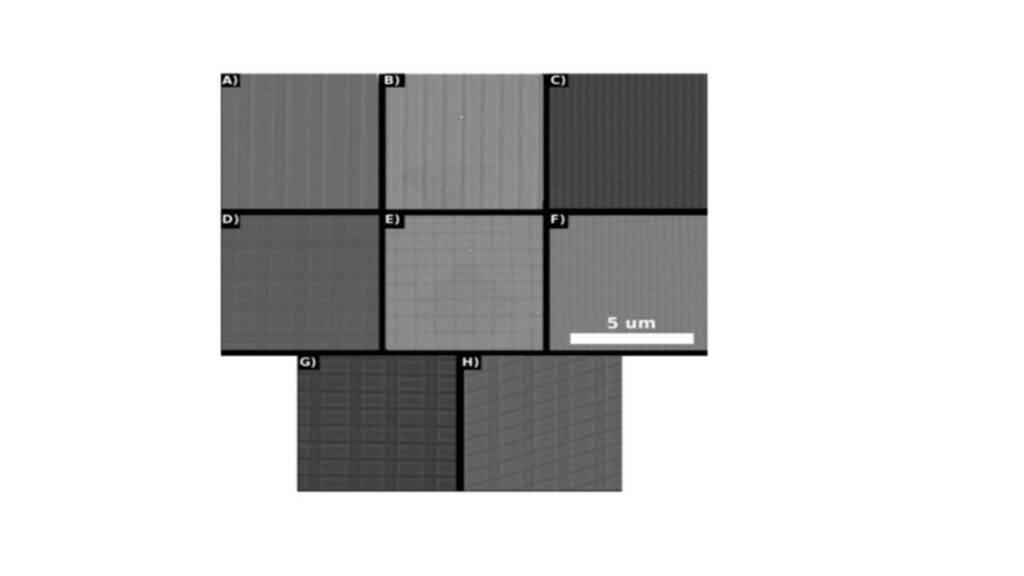
This European Patent has been filed by CSIC in collaboration with Porto University